
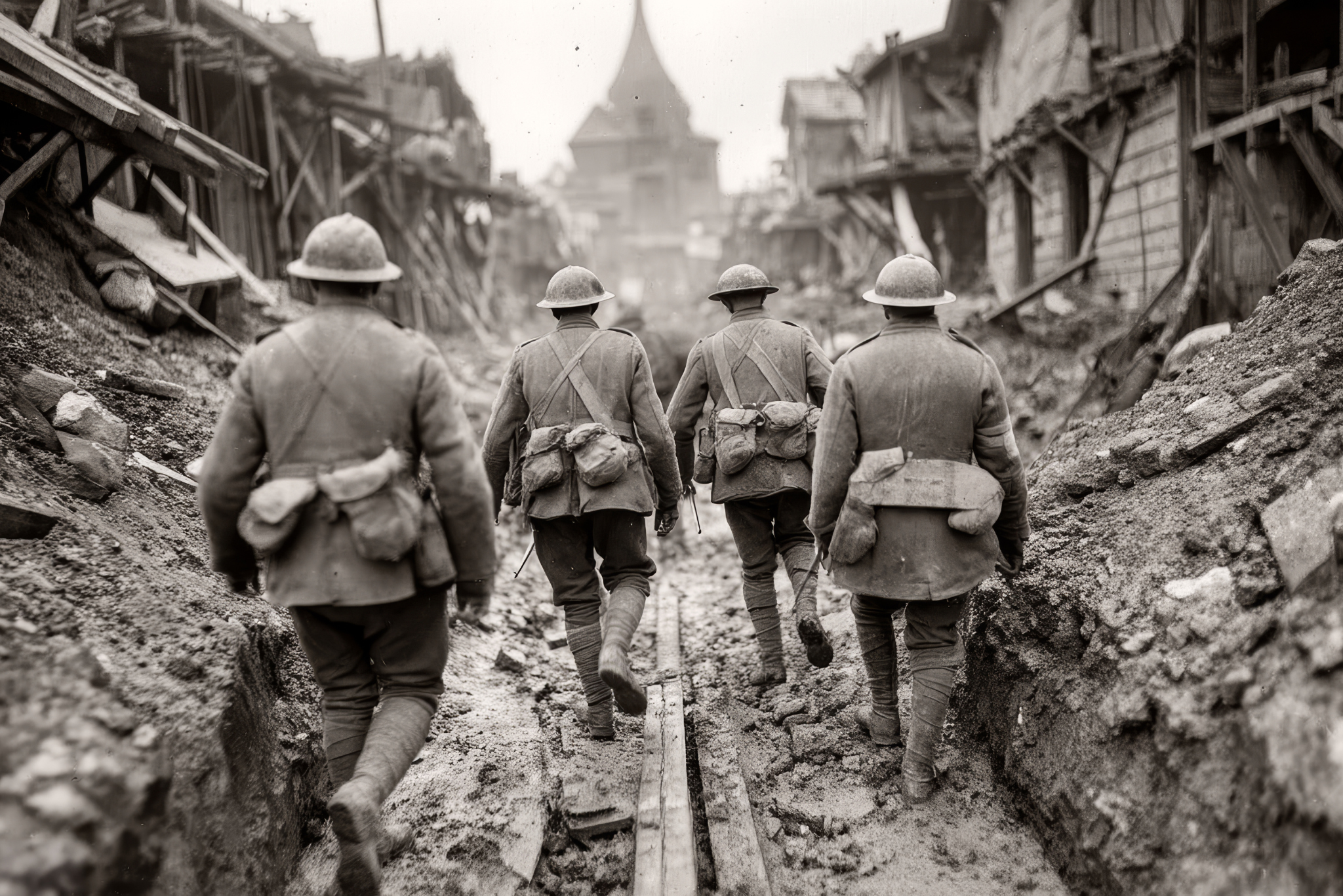
When work becomes a battleground, get your team out of the trenches
"They're just snowflakes."
We can all hear the gasps from HR but that's what I hear from leaders. They want their teams to toughen up. Come into work and get on with it. Stop complaining. Man up. Deliver their targets.
Meanwhile, the teams are feeling stressed, overwhelmed, overworked. They want more support. More understanding. More flexibility. They want to feel heard.
And round and round we go.
Stress is having a bigger impact in the workplace than ever before, but we're still throwing the same old solutions at it. Leaders want their teams to be more resilient. Teams want their leaders to actually give a sh1t about their wellbeing.
Everyone wants something from someone else. But nobody's willing to meet halfway.
So what happens? The workplace turns into a battleground.
Leaders blame the workforce for being weak. The workforce blames leadership for not caring. Everyone becomes entrenched in their positions. One side against the other.
"It ain't me, Guv."
Everyone's got their finger pointed at someone else. Nobody's looking at their own part in the mess. They aren't the problem.
While everyone's busy fighting each other, performance tanks. Stress goes through the roof. People are miserable.
This warfare mentality is exhausting. And it's killing your business.
The stress of being at war
If you're a leader you can't just tell people to toughen up when they're already running on fumes. That's not resilience. That's denial.
If you're part of the team, consider that your leaders are stressed too. They're under pressure from above, trying to deliver results with stretched resources, dealing with their own burnout.
Everyone's stressed. And when people are stressed, they become dickheads.
Actually, with rare exception, everyone's a dickhead when they're stressed (I have yet to meet the unicorn for whom this is not the case!). Leaders snap at their teams. Teams passive-aggressively resist every new initiative. If you don't even know you're stressed - if you think this is just "how work is" - what's going to change?
That's the problem with workplace warfare. It becomes normalised. The constant tension, the Sunday night dread, the us-versus-them mentality - it all just becomes background noise.
But stress deserves diagnosis. That's the foundation of my S.T.R.E.S.S.™ framework.
Until you understand what's really driving the conflict, not just that people are frustrated, but where that frustration is actually coming from, you're just managing symptoms.
Yes, we need to help teams build genuine resilience. But we also need leaders to understand that "just toughen up" isn't a strategy. It's a cop-out.
Why teams get stuck in us versus them
It's easier to blame the other side. Safer. You get to be right. You get to be the victim. You don't have to look at what you're bringing to the battlefield.
Leaders stay in their "snowflake" narrative. Teams stay in their "they don't care about us" narrative. Everyone's dug in like an Alabama tick.
The longer you stay entrenched, the wider the gap gets. The harder it is to see a way out.
What it takes to declare peace
You can't build a high-performing team when everyone's in trenches on opposite sides.
You need an alliance. Not a battlefield.
But forming an alliance when you're at war can require someone who can see both sides. Someone who isn't invested in being right. Someone who can create neutral ground where actual conversation can happen.
That's where I come in.
I've spent over twenty-five years in leadership, starting in the Royal Navy. I know what it's like to operate under pressure. I know what stress does to teams. I know what it takes to get people working together instead of against each other.
Moving from Germany to Switzerland to the UK
I use this analogy with clients. Right now, your team is in Germany. Enemy territory. Everyone sees the other side as the enemy. (Sorry Germany, I know we’re friends now….)
Before we can get them to the UK, working together brilliantly, we need to move them to Switzerland first. Neutral ground. A place where they can stop fighting and start talking.
First, we deal with the emotion. You can't rebuild trust over a video call when people feel under siege. When your team has started to demonise each other, we need to be in the room together. That’s exactly what a Team Rebuild is designed for. We need to deal with what's happening backstage, the stress, the fear, the frustration, before we can address what's showing up frontstage, in behaviour.
Then, we build understanding. Yes, teams need to build resilience. But real resilience isn't about toughening up and ignoring stress. It's about understanding your pressure points and developing actual coping strategies. And teams need to understand their leaders are under pressure too. This isn't about being soft. It's about being smart.
Then, we create the alliance. I'll work with your leaders, your teams, or both. Whatever it takes. I don't care if I come in top-down, bottom-up, or sideways. I just care about getting people out of their trenches and actually working together.
Only then can we move forward. Once people stop seeing each other as the enemy, we can start building something. That's when peak performance happens. And whatever you do, don’t try and ‘upskill’ until you’ve got to this step. They won’t be listening or ready for it. They’ll be too busy with their fingers in their ears to hear about Lencioni’s Five Dysfunctions of a Team.
What I see on the other side
My mission is to help people perform at their best at work. Not just scrape by. Not just survive the warfare. Actually thrive.
After I've worked with a team, whether that's leadership, workforce, or both, everyone should feel like they can perform better. Noticeably better.
Less stressed. More purposeful. Maybe even enjoying the work again. Wild concept, I know.
Too many people are having a terrible time at work. And it doesn't have to be this way.
The battleground mentality can be shifted. The trenches can be abandoned. The warfare can end.
But it won't change until someone stops the blame game and starts building bridges.
Are you ready to declare a truce?
If your workplace has turned into a battleground, if your leaders are calling teams snowflakes while teams are calling leaders heartless, if everyone's stressed and blaming each other, it's time for a different approach.
You need someone who can see both sides. Someone who'll tell it straight while still having everyone's back. Someone who can help you move from Germany to Switzerland to the UK.
That's what I do.
If you'd like to chat about how to get your team out of the trenches, take a look at how a Team Rebuild works, book a chat or send me a message.